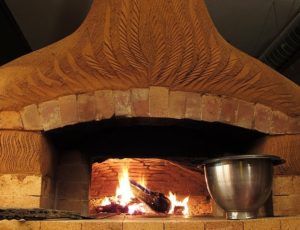
Here's a little video showing the construction of a super-insulated restaurant oven. The "basket" design seems to be a pretty inexpensive and effective way to insulate -- not necessary for every oven, but for ones that really get regular use, I think it's worth it... It's a pretty big oven, too, so I opted for hand-made mud bricks instead of mud over a sand-form. For more details about the technique (including brick-making, as well as photos of how well the insulation protects the bamboo), there's an extensive post and pix about the Gathering Together Farm Oven, which was similarly (re)built. . . .
Hug Hut at Muddy Creek School, Philomath
Muddy Creek charter school in Philomath commissioned this mud project as the initial step in creating an "outdoor classroom." All 60 kids, K-5, participated in 2 days of playdough brainstorming and design, and six days of mud. Parents and neighbors contributed random prunings of willow, fruitwood, and forsythia that we wove into a rough hut; the mud came up out of a hole in the ground, and we ended up making a lovely cob bench and this "hug hut." The hut was designed to "last" for just one winter, and then get torn down so new students could make their own -- instead of taking care of . . .
Earth Oven variant: insulation in a basket over jumping bricks!
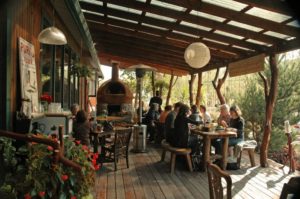
Insulate! Insulate! Insulate! This oven gets used about 5 days a week, so it never cools down -- partly thanks to 11" of insulation under the hearth (vertical wine bottles in perlite), and about 8" of loose perlite over the dome (poured into a basket made of bamboo covered in clay/plaster soaked burlap and mud). I built it for a local CSA farmstand restaurant (gathering together farm). The whole story (build and repair) follows, complete w/photos of making our own bricks and laying them up from the inside out! The oven started in a public workshop; folks came to make mud and learn and we . . .