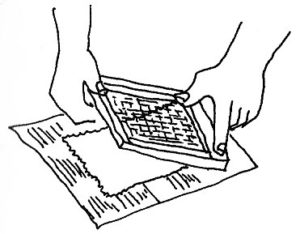
This is one example of many projects found in the book The Best of Making Things - A Hand Book of Creative Discovery. Find out more about the book! You wil need: 8 strips of wooden lath (or cut a wooden yardstick) - small nails - hammer - window screening - staple gun - dry vegetable fibers (such as corn husks, onion skins, celery strings, sawdust, weeds, or straw) - scissors -blender - paper towels, napkins, paper bags, newspaper or tissue - dishpan - newspaper - sponge - iron. Make 2 wooden frames the same size (any size that fits in a dishpan). Staple a piece of window screen onto . . .
Learning by Doing
This is an exerpt from The Best of Making Things - A Handbook for Creative Discovery by Ann Sayre Wiseman. The phenomenon of of learning belongs to the child, not to the teacher. We do not teach a child to walk - one of many skill potentials in all beginners. At best, we stimulate discovery, desire, and curiosity; encourage and whet the appetite; provide space; and anticipate readiness to exercise the inevitable. Learning by experience is profound knowledge, more deeply recorded in the memory than theory or speculation. The most direct, immediate, and satisfying path to knowledge is . . .
Terra Preta and “the Biochar Solution”
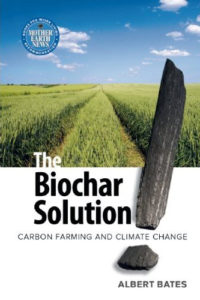
The Biochar Solution: Carbon Farming and Climate Change, by Albert BatesA review by Kiko Denzer Living trees lock up carbon, and burning releases it. That's (part of) the conflict-ridden equation of global warming. Albert Bates has been at the front lines of the warming conflict since his 1990 title, Climate in Crisis. In this book, he defines biochar as charred (pyrolized) organic matter intended to be applied to soil in farming or gardening. His biochar solution merely asks us to partially burn our waste wood and other carbonaceous matter into charcoal, and add it to our soil where it . . .